 >
> RWANDA TRAVEL GUIDE, TRAVEL GUIDE TO RWANDA
Are you an intrepid traveler in need of tips on how to travel to Rwanda? Consider reading through this Rwanda travel guide!
Discover Rwanda, the Land of a Thousand Hills, a compact East African gem offering thrilling gorilla trekking, vibrant safaris, and rich cultural experiences.
This comprehensive Rwanda travel guide covers everything from national parks to practical advice, ensuring your visit to Rwanda is unforgettable and seamless in this resilient nation.
Location Of Rwanda
Rwanda is nestled in the heart of East Africa, a landlocked country bordered by Uganda to the north, Tanzania to the east, Burundi to the south, and the Democratic Republic of the Congo to the west.
Spanning about 26,338 square kilometers—roughly the size of the US state of Vermont or half of Switzerland—it’s one of the continent’s smallest yet most densely populated nations.
Known for its rolling hills, lush montane rainforests, savannahs, and lakes, Rwanda’s geography creates a stunning backdrop for adventures.
Its position in the Great Rift Valley contributes to diverse ecosystems, from the Virunga volcanoes in the northwest to the expansive Akagera savannah in the east.
This strategic location makes it an ideal hub for multi-country trips combining Rwanda with Uganda, Kenya, or Tanzania via the East Africa Tourist Visa.
Brief History About Rwanda
Rwanda’s history is a tapestry of ancient kingdoms, colonial influences, tragedy, and remarkable recovery worth immersing in when on safaris in Rwanda.
Pre-colonial Rwanda was ruled by monarchs in a structured society divided into clans, with the Tutsi, Hutu, and Twa groups coexisting.
German colonization began in 1897, followed by Belgian rule after World War I, which deepened ethnic divisions between the Hutu and Tutsi ethnic groups and fueled the genocide through identity cards that classified individuals by ethnicity.
Independence in 1962 led to Hutu-led governments, but tensions escalated, culminating in the 1994 genocide, where nearly one million Tutsis and moderate Hutus were killed in 100 days.
Post-genocide, under President Paul Kagame since 2000, Rwanda has focused on unity, reconciliation, and development. Rwandans pride themselves on their ability to overcome the trauma of the genocide and continue to work towards a prosperous future as a united nation
Today, Rwanda is a model of progress in Africa, with high female representation in parliament (over 60%) and rapid economic growth.
Sites like the Kigali Genocide Memorial educate visitors on this dark chapter while highlighting the nation’s resilience and forward momentum.
Why Visit Rwanda?
Why visit Rwanda? This is one of the major questions most tourists ask themselves before visiting Rwanda, and some of the reasons why they need to visit include the following:
This dynamic country offers unparalleled wildlife encounters, breathtaking scenery, and inspiring stories of renewal.
As one of the safest African countries, it’s perfect for first-time visitors seeking adventure without hassle.
Trek to see endangered mountain gorillas in Volcanoes National Park, spot the Big Five in Akagera National Park, or explore chimpanzees in Nyungwe Forest National Park.
Beyond nature, dive into Rwanda’s vibrant culture through festivals like Kwita Izina or community visits.
Kigali, one of Africa’s cleanest cities, blends modern vibes with poignant history.
With sustainable tourism funding conservation—38% of global mountain gorillas reside here—your trip supports local communities.
Whether for Rwanda gorilla safaris, birding, or cultural immersion, Rwanda delivers intimate, high-impact experiences in a compact, accessible setting. It’s not just a destination; it’s a transformative journey in East Africa.
Traveling To Rwanda

Planning your journey to Rwanda is straightforward, thanks to improved infrastructure and connectivity. As a gateway to East Africa, the country welcomes visitors with efficient entry points.
This is how to get there by air or land.
Traveling To Rwanda by Air
Flying is the most convenient way to reach Rwanda.
Kigali International Airport (KGL), the main hub, receives direct flights from major African cities like Nairobi (Kenya Airways), Addis Ababa (Ethiopian Airlines), Entebbe (Uganda), and Dar es Salaam (Tanzania).
European connections include Brussels (Brussels Airlines) and Amsterdam (KLM), while Middle Eastern carriers like Qatar Airways and Turkish Airlines offer routes from Doha and Istanbul.
RwandaAir, the national carrier, expands with new direct flights from Europe and Africa, with flights from the US typically connecting via these hubs, taking 15-20 hours for travelers visiting Rwanda to reach this nation.
Upon arrival, expect smooth immigration—visas on arrival for most nationalities. Alternatively, travelers visiting Rwanda can obtain a 30-day tourist visa upon arrival for $50, with multiple entries costing $70.
However, it is worth noting that proof of yellow fever vaccination is required for visitors arriving from countries with a risk of yellow fever.
Budget $800-1,200 for round-trip international flights, excluding peak seasons and periods with events like the UCI Road World Championships.
Traveling to Rwanda By Land
Overland travel suits those visiting Rwanda from neighboring countries like Uganda, Tanzania, Kenya, the DR Congo, etc.
Buses from Uganda (Kampala town to Kigali, 8-10 hours, $20-30) or Tanzania (Dar es Salaam via border crossings) are affordable but basic—opt for companies like Jaguar or Modern Coast.
From Burundi or the Democratic Republic of Congo, services are limited due to occasional border tensions; the Rwanda-Burundi border has been closed since 2024, so use Uganda or Kenya routes.
Driving in from neighbors requires valid documents, insurance, and awareness of road conditions—Rwanda’s roads are well-maintained, but borders can be busy and rugged.
The East Africa Tourist Visa simplifies multi-country travel. Always check advisories for safety near DRC borders.
Getting Around Rwanda
Rwanda’s small size (drivable end-to-end in 5–6 hours) and good roads make navigation easy for people visiting Rwanda on tours.
Domestic flights via RwandaAir serve remote areas like Rubavu ($50) and the Akagera region.
More mobile transportation options in Kigali include moto taxi rides, Yego cabs, and public buses.
- Public buses like Virunga Express connect cities affordably ($5 Kigali to Musanze), though crowded.
- For comfort, private transfers ($100-200/day) or car rentals ($50-100/day, international license needed) are ideal for safaris in Rwanda.
- In Kigali town, travellers can use the Yego app for taxis or moto taxi rides (cheap, $1-3, helmets mandatory) as mobile transportation options.
- Bicycles or minibuses (twegerane) offer local flavor in rural spots for travellers using them as modes of transport.
Negotiate fares, respect speed limits (40-60 km/h), and note that car-free mornings in Kigali (1st/3rd Sundays) and Umuganda closures on the last end-of-month Saturday are to be expected.
Popular Travel Destinations and Rwanda National Parks to Traverse When on Rwanda Safaris
The nation boasts diverse destinations, from misty mountains to savannah plains, worth visiting when on Rwanda trips. Its four national parks anchor most safaris, offering primate tracking, wildlife viewing, and eco-adventures.
Explore these highlights for unique experiences in the country.
Nyungwe Forest National Park

In southwestern Rwanda, this 1,000 sq km montane rainforest, established in 1903, is a biodiversity hotspot with 1,068 plants, 310 birds, butterflies, orchids, and 75 mammals worth seeing by tourists visiting Rwanda.
Nyungwe Forest National Park is also home to thirteen different primate species, boasts the biggest area of remaining montane forest in East or Central Africa, and is also famed for its 160-meter-long canopy walk as well as chimpanzee trekking safaris.
Track 13 primate species, including chimpanzees ($150 permit), or hike the 91m canopy walk—East Africa’s only one.
Spot the Rwenzori turaco or red-faced barbet on birding tours.
Additionally, Nyungwe National Park’s Congo Nile Trail is a stunning multi-day adventure route that lets you hike or bike through breathtaking landscapes while immersing yourself in local culture and interacting with vibrant communities. Over 130 kilometers of other hiking routes also allow visitors to explore its various habitats.
It is always best to visit Nyungwe Forest National Park in the shoulder season (April-May, September-November) for lush views; entry is $80. Combine with tea plantations nearby for a full itinerary.
Rwanda Volcanoes National Park
Located in northwest Rwanda, Volcanoes National Park spans 160 square kilometers and is a cornerstone of conservation, safeguarding five of the eight Virunga volcanoes and approximately 300 mountain gorillas—38% of the world’s remaining 1,063.
Renowned as one of Africa’s most accessible gorilla trekking destinations, the park, just 80 kilometers from Kigali International Airport, is a highlight of Rwanda gorilla tours.
Established as Dian Fossey’s legacy site, Volcanoes National Park supports vital conservation through the Dian Fossey Gorilla Fund, with a portion of trekking revenue of about 75% funding community projects.
Gorilla trekking ($1,500 permit) in Volcanoes National Park offers intimate encounters with 10 habituated groups, while golden monkey tracking and Mount Bisoke hikes add variety.
Treks, lasting one to four hours each way, traverse montane rainforests with steep, muddy paths, requiring sturdy hiking boots and long, breathable clothing for the treks.
The dry season (June–September) is ideal for gorilla trekking excursions in Volcanoes National Park, but always remember that children under 15 are not permitted to trek gorillas.
Volcanoes National Park is a must-visit for nature enthusiasts seeking unforgettable wildlife experiences.
Akagera National Park
Situated in eastern Rwanda, Akagera National Park spans 1,122 sq km of diverse savannah and was established in 1934.
After recovering from past decline, it now hosts the Big Five—lions, leopards, rhinos, elephants, and buffalo—alongside over 8,000 animals and 480 bird species.
The eastern region of Rwanda hosts Akagera NP and its varied habitats, including grasslands, savannah plains, rolling hills, marshes, lakes, and Central Africa’s largest protected wetlands, with over 8,000 animals creating a stunning backdrop for classic safaris in Rwanda.
Game drives showcase wildlife, while Lake Ihema boat cruises reveal hippos and waterbirds in Rwanda Akagera NP.
Entry costs $60, with year-round access, though the dry season (June–September) is optimal. A must-visit for safari enthusiasts seeking biodiversity and scenic beauty.
Kigali City
Kigali, Rwanda’s vibrant capital, is a dynamic travel hub blending rich history, modern amenities, and cultural charm, known for its cleanliness and stunning city views from its hilly geography.
As one of Africa’s cleanest and safest cities, it’s an ideal base for exploring Rwanda, located just 80 kilometers (50 miles) from Volcanoes National Park.
Key Kigali attractions include the poignant Kigali Genocide Memorial, offering insights into the 1994 tragedy; the Inema Art Center for contemporary art; and the bustling Kimironko Market for an authentic taste of local living.
The city’s lively restaurant and nightlife scene, paired with high-quality Rwandan coffee, delights foodies, while chic boutiques and cafes fill its modern shopping malls.
Kigali, Rwanda, Cultural experiences are enriched by Umuganda, a community cleanup day held on the last Saturday of each month, though it often impacts business hours.
Don’t miss the State House Museum and Natural History Museum for deeper historical context when visiting Rwanda and its capital, Kigali.
With scenic views from Mount Kigali, the city offers a perfect blend of urban energy and cultural immersion for travelers visiting Rwanda for their dream trip.
Lake Kivu
Rwanda’s largest lake, on the western side of the country, shared with the DRC, offers serene shores for relaxation, ultimately also adding to the scenic beauty of the country.
In Gisenyi or Kibuye town, enjoy beaches, kayaking ($20–50), or Congo Nile Trail biking during Rwanda trips here.
Sunset boat trips reveal islands and safe swimming in grey-green waters, making it an ideal spot for unwinding post-safari excursions.
RWANDA TRAVEL GUIDE: OTHER TOURIST PLACES AND DESTINATIONS TO EXPLORE ON TOURS
Beyond the highlights, explore Gishwati-Mukura National Park for primates and waterfalls; Buhanga Eco-Park for sacred forests; Twin Lakes (Burera, Ruhondo) for scenic hikes; Lake Ihema in Akagera for fishing; Rusumo Falls on the border; Muyaga Falls near Nyungwe; Rubona Peninsula for views; and Nkotsi Village for culture.
These tourist spots in the land of a thousand Hills, among others, enrich any Rwanda itinerary worth booking by all travellers with their friends and families.
Rwanda’s Famed Tourist Attractions Seen During Safari Excursions
Rwanda’s attractions shine on safaris, from primates to volcanoes. These icons draw visitors for close wildlife and historical encounters.
Mountain Gorillas in Volcanoes National Park

Volcanoes National Park, nestled in Rwanda’s northwest amid the Virunga Mountains, is a premier destination for gorilla trekking, hosting about 300 mountain gorillas—roughly one-third of the world’s 900 remaining.
This national park, a cornerstone of Rwanda’s tourism and conservation efforts, offers unforgettable encounters with these endangered primates in their natural habitat of montane rainforests and bamboo forests.
Gorilla trekking is the only way to see these endangered mountain gorillas ($1,500 permit per person), allowing intimate, up-close views of habituated groups, provided visitors maintain a safe distance and avoid eye contact to respect the fauna.
Treks for gorillas, best during the dry season (June–September), traverse the park’s lush hills, with porters recommended to enhance the experience and support local communities.
As a star attraction of any Rwanda travel itinerary, the mountain gorillas located in one of East Africa’s iconic national parks provide travelers with perfect glimpses of them while seeking to experience firsthand the legacy of conservation in a land of a thousand hills.
Eastern Chimpanzees
Nyungwe Forest shelters large chimpanzee populations among 13 primates worth seeing when on Rwanda Chimpanzee trekking safaris.
Tracking chimpanzees in the hills, mountains, and montane rainforest of Nyungwe ($150 per person) reveals playful troops that can be observed from afar. It is a thrilling complement to Rwanda gorilla safaris.
Golden Monkeys
In Volcanoes National Park, track these rare, acrobatic monkeys in bamboo groves that are endemic to only the Virunga Mountains in the whole of the African continent.
Golden Monkey Permits to see these primates in the country are $100 per person, and the hikes last 1-3 hours. Spot them leaping from treetop to bamboo, which is often pure joy for primate lovers.
The Big Five Animals in Akagera
Akagera’s recovery boasts lions, leopards, elephants, buffalo, and rhinos. Game drives or helicopter tours ($120+) offer sightings amid antelopes and birds in the country during Rwanda wildlife safaris.
Rwanda Birds
A birdwatcher’s haven with 670+ species, including endemics like the Rwenzori turaco. Nyungwe (322 species), Akagera (480), and Volcanoes host predators, songbirds, and savannah varieties.
Other Wildlife Species
Beyond the Big Five, spot giraffes, zebras, hyenas, vervet monkeys, and other primates in Rwanda’s wildlife safari parks when on a Rwanda trip. Swamps and woodlands teem with plains game for drives and walks, so endeavor to explore them to see all the fauna this country packs.
Virunga Volcanoes
These majestic peaks—Karisimbi, Bisoke, Sabyinyo, Muhabura, and Gahinga—offer hikes with gorilla glimpses during Rwanda hiking safaris. Bisoke’s day trek rewards with views of other surrounding hills/mountains and unique habitats for wildlife in the country.
Dian Fossey’s Grave Site
In Volcanoes, hike to Fossey’s tomb and Karisoke Research Center during safaris in Rwanda for lasting memories. Her legacy inspires conservation; therefore, a moderate trek to her gravesite highlights gorilla protection efforts in the country.
Kigali Genocide Memorial Centers and Museums
The Kigali center honors 250,000 victims with exhibits and testimonies. The Ethnographic Museum showcases artifacts; the King’s Palace Museum showcases replicas of royal life. Essential for understanding resilience.
OTHER TOURIST ATTRACTIONS IN RWANDA TO EXPLORE ON RWANDAN TOURS
Discover Gorilla Guardians Village for cultural immersion; Hotel des Mille Collines (“Hotel Rwanda”); Presidential Palace Museum with plane debris; Gisenyi Public Beach for swims; Musanze Caves for lava formations; Nyamirambo Women’s Center for empowerment tours; Tea/Coffee Plantations like Sorwathe; Festivals like Kwita Izina; Religious sites (Our Lady of Kibeho, Nyamata Church), etc.
Plus, Akagera River, Murambi/Nyanza Genocide Museums; Bisesero Museum; Camp Kigali Memorial; Rusumo Falls; Buhanga Eco-Park; Lake Ihema; Muyaga Falls; Karisoke Center; Rubona Peninsula; Nkotsi Village; Eglise St Pierre; National University; Museum of Natural History; Dian Fossey Fund; Museum of Environment; Les Chutes de Ndaba; Kigali Cultural Village; Belgian Peacekeepers Memorial; Kigali Convention Centre; Kandt House; Kigali Public Library.
Contact your travel agent to help you customize the best itinerary, including any of these attractions, and enjoy endless discoveries.
Safari Activities Worth Engaging in When in Rwanda for Safari Holidays
Rwanda safaris thrill with primate tracking, wildlife views, and cultural dives. Engage in these for memorable holidays on the African continent.
Gorilla Trekking in Volcanoes National Park
Gorilla trekking in Rwanda, centered in Volcanoes National Park, offers a remarkable opportunity to observe one of the 10 habituated mountain gorilla groups in their natural montane rainforest habitat during Rwanda gorilla trekking tours.
Each standard gorilla trek in Rwanda, requiring a $1,500 permit, takes 1–4 hours each way through steep, muddy paths, making sturdy hiking boots and long, breathable clothing essential.
The dry season (June–September) is optimal for easier trails and better visibility.
A portion of trekking fees supports community projects around the Volcanoes National Park, enhancing conservation and local livelihoods.
Similar experiences are available in Uganda’s Bwindi forests and Mgahinga NP or Congo’s Virunga Park.
Booking through reputable tour operators ensures a seamless adventure, delivering an unforgettable encounter with these majestic primates in Rwanda’s lush, hilly landscapes.
Chimpanzee Tracking
Nyungwe’s rainforest offers chimp tracking to travellers on Rwanda trips. Observe chimpanzee troops foraging and caring for their young ones in their natural habitat while scouting for food.
Chimpanzee trekking in Nyungwe NP is best during the dry seasons for optimized sightings of these huge chimps in the country.
Golden Monkey Tracking
In Volcanoes National Park, track playful golden monkeys in lush bamboo forests during primate trips in the country.
Golden Monkey Permits cost $100, with hikes showcasing their acrobatics amid vibrant flora. Best in the dry season (June–September), this adventure offers a unique primate encounter in Rwanda’s hills.
Big Five Wildlife Safaris
Akagera National Park’s game drives reveal lions, elephants, and more ($60 entry). Home to the Big Five, it’s a year-round safari haven, with dry seasons (June–September) ideal for spotting wildlife congregations in Rwanda’s diverse savannah landscapes during safaris in Eastern Africa.
Rwanda Cultural Experiences
Rwanda’s cultural experiences reflect its resilient spirit and commitment to unity post-1994 genocide, shaped by colonial-era Hutu-Tutsi divisions.
Visit the Ethnographic Museum, Nyanza Palace, or vibrant markets to explore heritage.
Join traditional dances or the Kwita Izina festival, best in the dry season (June–September), for the latest stories on gorilla conservation and gorilla naming, an activity not done anywhere else in Africa.
Community initiatives like Umuganda, a monthly cleanup day on the last monthly Saturday, foster unity among the Rwandan people.
Educational programs promote peace, while artisan cooperatives empower craftspeople, showcasing resilience.
With the world’s highest female government representation, Rwanda builds trust and prosperity, inviting travelers to engage with its vibrant, united culture.
Birding Tours in Rwanda
Rwanda’s parks—Nyungwe, Akagera, and Volcanoes—host over 700 bird species, including vibrant endemics living in montane rainforests, mountains, and varied habitats, or birding hotspots.
Rwanda Birding tours to see the avians thrive in the dry season (June–September) when birds are most active, offering unforgettable sightings in lush forests and savannahs.
Boating Trips
Cruise Lake Kivu or Ihema for stunning views of hippos and birds ($50–80). Dry season (June–September) ensures pleasant outings. Wear life jackets for safety while enjoying Rwanda’s scenic waterways and diverse wildlife on serene boat trips.
Kigali City Tours
Discover Kigali’s blend of history and modernity through city tours. Explore poignant memorials, vibrant markets, and the Inema Art Center. Explore Rwanda’s safe, clean capital, where cultural heritage meets contemporary cafes and scenic Mount Kigali views.
Kigali Genocide Memorial Visits
Reflect at Kigali’s Genocide Memorial, a poignant site with free entry and $21 audio tours. Exhibits honor the 1994 tragedy, offering insights into Rwanda’s resilience and history, making it a must-visit for meaningful cultural understanding.
Culinary Tours in Rwanda
Savor Rwanda’s flavors with ugali, brochettes, and isombe. Culinary tours include coffee and tea plantation visits and bustling markets for fresh produce, offering a delicious dive into Rwandan cuisine and agricultural heritage.
OTHER TOURIST ACTIVITIES IN RWANDA TO ENJOY
Hiking/mountain climbing in Volcanoes; wildlife viewing; game drives; adventure sports like cycling, kayaking; filming/photography safaris; sport fishing in Kivu/Muhazi; nature walks; village tours; helicopter tours; swamp walks; cultural dances; festivals; religious site visits. These endless activity options enhance safaris.
Book your Rwanda trip today with your friends and family and enjoy all these firsthand!
Rwanda Safari Lodges, Hotels, And Camps to Crib at When on Expeditions
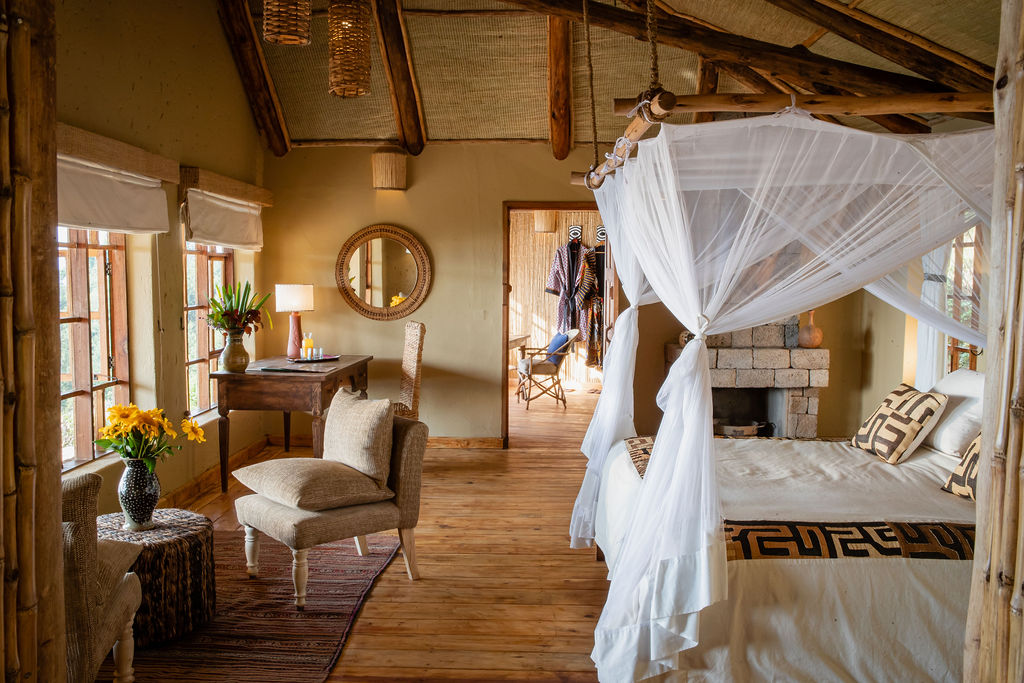
Rwanda’s accommodations that offer travellers comfortable stays range from luxury to budget, and they include.
1) In Volcanoes National Park: Bisate ($3000-4500), Five Volcanoes Boutique ($150-300), Le Bambou Gorilla Lodge ($100-250), Mountain Gorilla View ($150-300), Sabyinyo Silverback ($200-500), and Virunga Lodge ($300-600).
2) Akagera: Akagera Game Lodge ($100-250), Magashi Camp ($400-600), Ruzizi Tented ($150-300), Lake Shakani Campsite ($10-20).
3) Nyungwe Forest National Park: Nyungwe Top View Hill Lodge ($80-150), Gisakura Guest House ($30-70), and One & Only Nyungwe House/Nyungwe Forest Lodge ($500-1,000).
4) Lake Kivu: Mantis Kivu Marina Bay Hotel ($250-450), Emeraude Kivu Resort ($250-450), Lake Kivu Serena Hotel ($150-300).
5) Kigali: Lemigo Hotel ($150-300), Kigali Serena ($200-400), The Retreat ($300-600), Radisson Blu ($200-400).
Consult tour companies for recommendations.
Best Time to Visit Rwanda
The best time to explore Rwanda can be seen year-round, but timing matters. The dry season (June-August, December-February) is best for gorilla trekking and hiking, though it brings along higher crowds/prices, requiring travelers to pay more money than usual.
Shoulder seasons (April-May, September-November) are ideal for birdwatching, chimp trekking, and scenic views of the countryside and town attractions during a trip in Rwanda, Africa.
Rainy seasons (March-May) bring lush landscapes, fewer tourists, and lower costs, but muddy trails, requiring travelers to dress appropriately during the Rwanda trip.
For specifics, travellers are encouraged to explore Rwanda parks in Africa like Volcanoes during the dry season; Nyungwe during the shoulder season; Akagera year-round, though the dry season is best; and Lake Kivu from June to September/January-February.
Attending events like Kwita Izina (best in September), the Film Festival (July), and the Peace Marathon (May). Plan based on interests.
Average Rwanda Safari Prices
Rwanda safari costs vary by duration, luxury, and activities.
- Rwanda Gorilla permits are $1,500; chimp permits go for $150; park entry is $30-100.
- Budget lodges cost $10-80/night; mid-range, $300; luxury, $1,500+.
- International flights are $800-1,200; domestic flights are $200-400.
- Road transfers cost $50-100/day.
- Additional Costs for Meals go for $10-30; insurance costs $100-300.
- A 7-day tour with trekking/parks: $9,000-15,000/person (excluding flights/visas).
Book early and consult experts to tailor your choices for a better budget-fitting trip in Rwanda, Africa.
Additional Rwanda Travel Advisories and Key Information
Stay informed for a smooth trip in Rwanda. Some of the Key tips to follow include.
Rwanda Visa and Entry Requirements
Most country citizens can get a $30 per person visa on arrival in Rwanda (30 days) or an East Africa Visa for $100 (90 days).
Passports should be valid for 6+ months; have proof of yellow fever if coming from risk areas.
Rwanda is visa-free for some Africans, with online visa options available, so check properly beforehand if your nation qualifies.
Safety and Security in Rwanda
Rwanda is safe with low crime rates, but normal precautions are worth taking; for example, avoid night walks, as you can get lost in the towns, and secure valuables in hotel safes during your trip in Rwanda, Africa, so that they too don’t get lost.
Borders with DRC are not so safe, so avoid them. Also, avoid non-essential travel to Rusizi/Rubavu due to violence.
Health Safety in Rwanda
Yellow fever, hepatitis, typhoid, and rabies vaccines are advised before you embark on a trip to Rwanda, Africa.
Malaria is present in Rwanda year-round, though at low levels, especially in lower-altitude areas like Akagera National Park and Kigali, but travelers are encouraged to bring and use repellent while on a Rwanda trip.
As a traveler on a Rwanda trip, you are encouraged to drink only bottled or boiled water in Rwanda.
In 2024, the Marburg virus outbreak (26 cases, 8 deaths by Sep 2024) affected Rwanda—so monitor WHO to confirm that there are no ongoing major issues in 2025 in Rwanda, Africa.
Insurance is mandatory, so purchase one before travelling to Rwanda, Africa.
Local Laws to Abide by in Rwanda
No plastic polythene/bags are allowed in the nation. This national ban on non-biodegradable plastic bags, paired with community cleanliness initiatives, has made Rwanda one of the cleanest countries in Africa.
Bicyclists must wear helmets and reflective gear for safety.
Respect for Rwanda’s genocide history and the president is expected, with insensitive remarks potentially leading to legal consequences.
Anti-littering laws are strictly enforced, and Kigali observes car-free mornings on the first and third Sundays monthly to promote eco-friendly practices.
While LGBTQ+ identities are not illegal, public acceptance is limited, so discretion is advised.
Use your right hand for interactions, such as handshakes, and dress modestly to align with cultural norms, ensuring respectful engagement with Rwandan society.
Languages and Local Dialects of Rwanda
Rwanda’s official languages are Kinyarwanda, spoken by 99% of the population, English, French, and Swahili.
Kinyarwanda dominates daily living, but language barriers may arise in rural areas where English and French are less common.
English is widely used in tourism, facilitating communication for travelers on any Rwanda trip.
Learning basic Kinyarwanda phrases enhances cultural connections; for example, you can say “Muraho” for hello, “Amakuru?” for “How are you?”, and “Murakoze” for thanks.
These simple greetings help travelers engage respectfully with Rwanda’s vibrant communities.
Rwandan Food and Drink
Rwandan cuisine or food, features staples like ugali (maize porridge), matooke (cooked green bananas), isombe (cassava leaf stew), and brochettes (grilled meat skewers).
Abundant fresh fruits, banana beer, Primus lager, and locally grown tea and coffee are popular.
Kigali offers modern African fusion dishes and food and plentiful vegetarian options, blending traditional food flavors with contemporary culinary trends for a delightful dining experience.
Currency in Rwanda

The Rwandan Franc (RWF) is Rwanda’s official currency, with an exchange rate of approximately 1 USD to 1,000 RWF.
International credit cards, primarily Visa and Mastercard, are widely accepted in urban areas like Kigali and tourist hubs such as Nyungwe, though American Express is not.
ATMs are available in Kigali for cash withdrawals, with the Bank of Kigali being a trusted option.
Local markets and smaller vendors prefer RWF cash, so carry some for rural transactions.
For financial protection, a solo traveler should budget around $1,500 for a Rwanda trip, covering extras like meals, transport, and activities, ensuring a seamless exploration of Rwanda’s attractions.
Rwanda Time Zone
Rwanda’s primary time zone is Central Africa Time (UTC +2); no daylight saving. This means Rwanda in Africa is 7 hours ahead of EST, 10 hours ahead of PST.
Internet and Wi-Fi in Rwanda
Rwanda boasts widespread 4G coverage through providers like MTN, Airtel, and Tigo, with SIM cards costing just $0.50 upon presenting a passport.
Reliable Wi-Fi is available in hotels and cafes, particularly in Kigali and tourist areas.
Affordable data plans ensure travelers stay connected for navigation, communication, and sharing experiences while exploring Rwanda’s national parks and cultural sites.
Religion in Rwanda
Rwanda’s religious landscape is diverse, with 65% Roman Catholic, 9% Protestant, and 1% Muslim, alongside blended indigenous beliefs.
Sacred sites like Our Lady of Kibeho provide profound spiritual insights for tourists.
Respecting local religious practices enhances cultural appreciation during travel across this vibrant African nation.
Local Culture and Cultural Etiquette in Rwanda
Rwandan culture emphasizes respect, particularly for elders, shown through handshakes or bows; however, some may adopt a French-style cheek kiss with close acquaintances.
Modest dress and removing shoes indoors are customary, as is using the right hand for interactions.
Public affection is discouraged, and the nation’s focus on rebuilding post-genocide fosters unity, which travelers should honor.
Media in Rwanda
Local media outlets in Rwanda provide the latest stories and news coverage, while international news is accessible via the internet in urban and tourist areas.
Tourists should approach sensitive topics, such as the 1994 genocide, with respect and caution to align with cultural norms and avoid misunderstandings during their stay.
Rwanda Safari Packing List
For a Rwanda safari, pack personal essentials like a passport, visa, travel insurance, vaccinations, medications, and a first-aid kit.
Include toiletries, insect repellent, sunscreen, a power adapter, a water bottle, snacks, a guidebook, and Rwandan Francs (RWF) to ensure a comfortable and prepared adventure across Rwanda’s diverse landscapes.
Planning and Booking Rwanda Safaris
Planning a Rwanda trip requires early booking for permits, especially for gorilla trekking, and consideration of seasons and budget.
Engage expert tour operators to craft tailored itineraries, ensuring seamless experiences across Volcanoes, Akagera, and Nyungwe parks, maximizing your adventure in this East African gem.
Rwanda Tour Operators
Gorilla Safaris and Tours, Prime Safaris and Tours Ltd, Wild Gorilla Safaris, Gorilla Safari Rwanda, Rwanda Gorilla Tracking Safaris, Gorilla Tracking Rwanda, and Africa Safaris Tours are some of the reputable safari companies to use when booking your Rwanda tours, for they have excellent reviews and tailored packages.
Rwanda Tour Packages
Top options include 6-day gorilla trekking trips ($5,290+), 10-day Kenya-Rwanda combos ($8,990+), and 16-day highlights with Masai Mara/Cape Town ($11,290+), etc.
Rwanda Travel Guide: Commonly Asked Questions
Is It Safe to Travel to Rwanda Right Now? | Is It Safe to Travel to Rwanda Now?
Rwanda is generally safe with low crime rates, making it one of Africa’s safest destinations. Exercise caution near DRC borders and follow standard precautions for a secure trip.
Is Rwanda Good for Tourists?
Rwanda is ideal for tourists, offering a unique blend of vibrant culture, rich history, and stunning nature. It’s safe, following its emphasis on safety and security post-genocide, and the clean and welcoming environment suits all travelers.
What Do I Need to Know Before Going to Rwanda? |What Should I Know Before Traveling to Rwanda?
Know that Kinyarwanda is dominant, RWF is the currency, time is UTC+2, the yellow fever vaccine is required, and check border/destination updates for a smooth trip.
Do US Citizens Need a Visa to Rwanda?
Yes, US citizens require a $30 visa, obtainable on arrival or online, for entry to Rwanda, ensuring a straightforward process for exploring this East African gem.
What Is the Disease in Rwanda in 2024?
In September 2024, Rwanda reported a Marburg virus outbreak (26 cases, 8 deaths). Monitor WHO health updates and note regional cholera risks before traveling.
Can Americans Go to Rwanda?
Yes, Americans can travel to Rwanda, with many visiting annually to experience its renowned gorilla trekking, national parks, and vibrant cultural attractions.
Dos and Don’ts in Rwanda?
Do respect elders, dress modestly, and use the right hand during Rwanda travel excursions.
Don’t criticize the government, discuss genocide insensitively, litter, show public affection, or take photos without permission when on Rwanda travel and expeditions.
How Many Days Are Enough for Rwanda?
Five to ten days suffice to explore Rwanda’s highlights, including gorilla trekking and national parks, with the duration depending on your interests and itinerary.
Conclusion
Rwanda’s travel guide unveils Kigali’s vibrancy, Volcanos’ gorilla sanctuaries, Nyungwe’s chimp trails, Akagera’s safaris, and Lake Kivu serenity. Embrace culture and conservation while in Rwanda. Follow this Rwanda travel guide for the most successful dream trip—contact us to craft your perfect adventure!