 >
> Tourist Attractions Within The Park
Read more
Mount Elgon National Park straddles the Uganda-Kenyan border and is a treasure of East Africa, a spectacular and untamed environment.
This extinct volcano is one of the oldest physical characteristics of Uganda and is famous for its enormous shape, unique biodiversity and cultural significance.
A UNESCO Man and Biosphere Reserve, the park covers 1,279 square kilometers and offers an unspoiled escape into nature with lush montane forests, rare plant species, including Carduus afromontanus and Ardisiandra wettsteinii, as well as alpine moorlands and one of the largest intact mountain calderas in the world.
Mount Elgon National Park offers an exceptional trip for everyone interested in trekking, birding or spelunking.
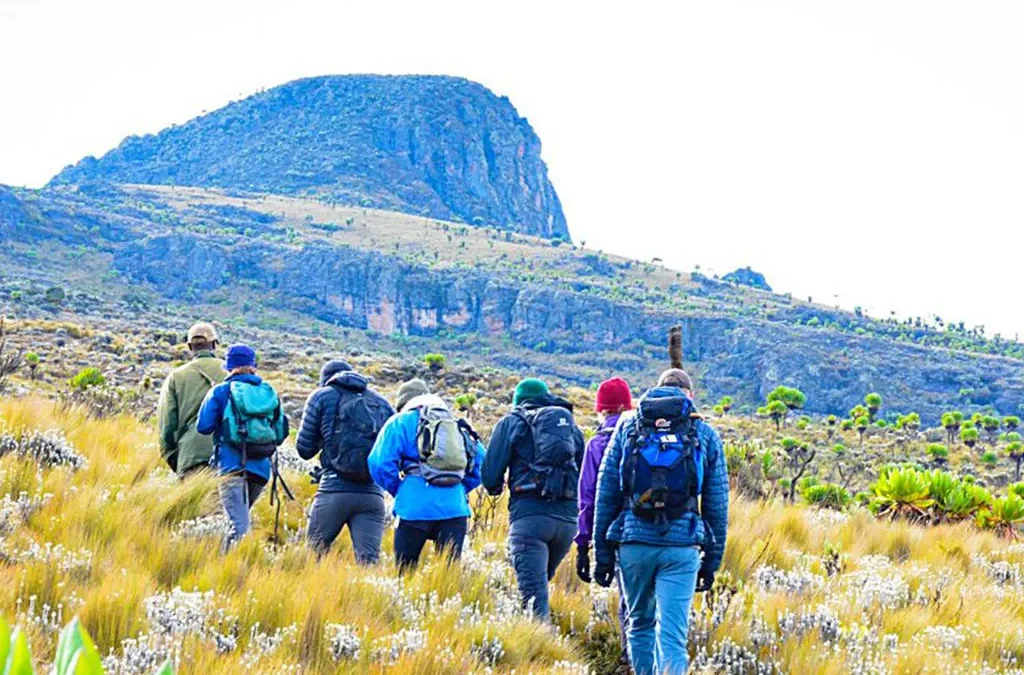
Mount Elgon National Park is located in the eastern region of Uganda and western Kenya, northeast of L. Victoria in East Africa.
Bisected by the Ugandan-Kenya border, the park covers 1,110 km² in Uganda (gazetted in 1992) and 169 km² in Kenya (gazetted in 1968).
The volcanic mountain in the park, one of East Africa’s oldest and formerly Africa’s highest mountain, has a diameter of approximately 80 kilometers and rises over 3,000 meters above sea level and the surrounding plains.
Its highest summit peak, Wagagai, stands at 4,321 meters, making it the fourth-highest peak in East Africa.
This vast landscape offers a cool respite from the hot plains below, with higher mountain altitudes providing a sanctuary for diverse flora and fauna.
Mount Elgon is an extinct volcano, and one of the highest mountains in Africa, although millennia of erosion have lowered its height from its originally majestic stature.
The park’s landscape is a product of its volcanic past, including one of the largest preserved mountain calderas in the world, 40 km long and 8 km wide.
The lower slopes are covered in tropical montane rain forest, which gives way to mixed bamboo at 2,500–3,000 m, heath zones at 3,000–3,500 m and afro-alpine moorlands above 3,500 m.
The park receives up to 3,000 mm of rain a year and is an important water catchment area for more than a million people in Uganda and Kenya.
The climate is cool at higher and elevated altitudes providing relief from sweltering plains underneath.
Best time to go: The dry seasons from June to August and November to March, when trails are less muddy and visibility is ideal.
But the park is open all year round and rainfall has created its verdant highland forest and rare plants like enormous lobelias and groundsel.
Mount Elgon’s history as a protected area began in 1929 when the Ugandan side was designated a Forest Reserve.
By 1937, boundaries were finalized, and it became the Mount Elgon Crown Forest in 1940, later a Central Forest Reserve in 1951.
It was officially gazetted as a national park in Uganda in 1992 and in Kenya in 1968.
Managed by the Uganda Wildlife Authority and the Kenya Wildlife Service, the park is a transboundary conservation area, recognized as a Man and Biosphere UNESCO Reserve for its botanical diversity and ecological significance.
Local communities, including the Bagisu and Sabiny tribes, have agreements with Mt. Elgon park authorities to sustainably harvest natural resources like bamboo poles and shoots.
The slopes of Mount Elgon are rich in vegetation ranging from dense montane forest on the lower slopes of the mountain to afro-alpine luxuriant moorlands at higher mountain altitudes.
Tropical montane forest (1,500-2,500 m) Characteristic species include olive, Elgon teak and podocarpus festooned with lianas and epiphytes.
Mixed bamboo is dominant at 2,500-3,000 m. The heath zone (3,000-3,500 m) is studded with giant heather and wildflowers such as gladioli and delphiniums.
Above 3,500 m the moorland is populated by endemic species of plants such as Lobelia elgonensis and Carduus afromontanus, giving a strange atmosphere to the area.
The park is a shelter for biodiversity. Many animals including elephants, the blue monkey, buffalo and leopards remain elusive in the lush jungle.
Visitors are more likely to see black-and-white colobus, vervet monkeys and tiny antelopes such as duikers.
Mount Elgon is an Important Bird Area (IBA) and home to over 300 bird species including the uncommon Lammergeyer, Jackson’s Francolin and Black-collared Apalis.
Birdwatching is a pleasure, with species such Hartlaub’s Turaco and Alpine Chat prospering in the mountain forest and moorlands.
The highest slopes of Mount Elgon are pockmarked by caverns created by lava flows and erosion.
Kitum Cave is a famous trekking location and extends 200 meters into the mountain, and was utilized by local people and their cattle for shelter in the past.
Other significant caverns are the Kitum caves, Kapkwai and Khauka. Both are accessible through the Kapkwai Forest Exploration Centre.
These caves provide an insight into the park’s geological history and are used by hikers for overnight camping at spots such as Hunters Cave and Mude Cave.
The park’s most impressive feature is its enormous crater, one of the largest and most complete mountain calderas in the world.
The tallest summit peak, Wagagai (4,321 m), with its breathtaking perspective of the untamed environment, is accompanied by Sudek (4,303 m), Koitoboss (4,222 m) and Mubiyi (4,210 m), forming a jagged rim around the caldera.
Water has eroded volcanic ash at Suam Gorge and Simu Gorge to form Hot springs which are frequently visited and add to the geological attraction.
Unlike many mountains, including the famous Mount Kenya, the empty moorlands of Mount Elgon provide a unique hiking experience in which the descent into the crater is as satisfying as the final ascent to the peak.
Named after Frederick Jackson, the first European to summit Mount Elgon in 1889, Jackson’s Pool (4,050 m) and Jackson’s Peak (4,165 m) are iconic landmarks.
The pool, a shallow natural body, lies in the shadow of the volcanic plug of Jackson’s Peak, a sacred site for local communities to connect with ancestors in this untamed wilderness.
The Sasa Trail, the shortest yet most demanding route, spans four days. Starting at 1,250 meters, the Sasa Trail involves a strenuous 1,650-meter ascent on the first day.
The Sipi Trail begins at the Kapkwai Forest Exploration Centre, situated at 2,050 meters above the ground.
The Piswa Route provides stunning vistas of Uganda’s Karamoja Plains and Kenya’s Kapeguria and Nandi Hills.
The Endebess Bluff trail requires approximately two hours to reach its scenic lookout point from the trailhead.
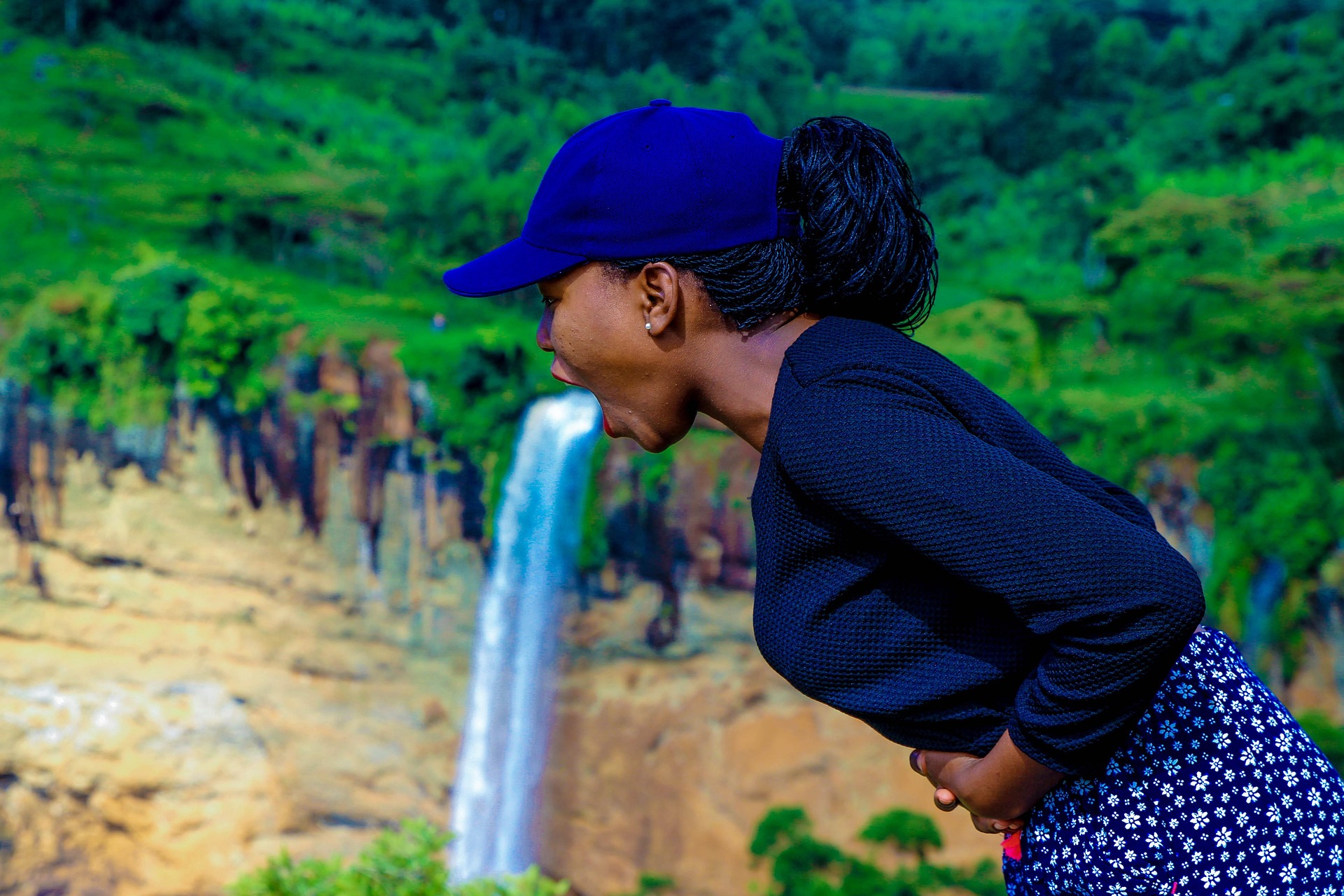
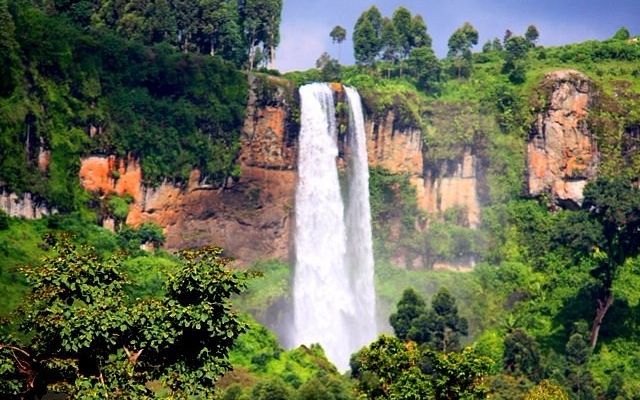
Sipi Falls – a chain of 3 magnificent waterfalls just outside the park in the Kapchorwa area.
The main fall plummets down a 100 m cliff and Simba Falls (69 m) over a cave entrance where tourists can stand behind the water.
Ngasire Falls (87 m) plunges over a high hill with amazing views. You just have to see these falls for their magnificent splendor. They are within an hour’s drive from Mbale.
Tewei Hill. This is a historical spot where Sabiny King Chemonges Kingo used to meet his subjects in the 1960s. It overlooks Sipi Falls.
The hill gives a wide perspective of Sipi Falls, Wagagai Peak and the Karamojong plains and it’s a good place for photography and cultural investigation.
Located in the Karamoja plains, these reserves are home to rare species like roan antelope, Bright’s gazelle, and ostriches, found only here and in Kidepo Valley National Park.
The reserves feature ancient rock paintings, believed to be over 3,000 years old, created by Kushite and Nilotic peoples. Bird species like Hartlaub’s Turaco and Lemon Dove thrive around Loporokocho swamp.
Located 65 km north of Mbale, the Nyero Rock Paintings in Kumi district are among Uganda’s finest rock art sites. Panel Two, featuring canoes with human figures, is particularly striking, offering a window into the region’s ancient history.
These trails traverse the caldera, hot springs, and scenic viewpoints like Endebess Bluff and Koitoboss Peak. Transboundary hiking allows ascents in Uganda and descents in Kenya.
A climb on Mt. Elgon’s deserted moorlands unveils a magnificent and uncluttered wilderness without the summit-oriented approach common to many mountains.
The Sabiny tribal people speak Sebei. The Bagisu speak a variety of the Lumasaba language called Lugisu.
Among the Mountain Elgon Lodge recommendations to stay at while Uganda safaris include.
Entrance fees are administered by the Uganda Wildlife Authority and KWS, and depend on whether you are a resident or not.
Prices may vary. Visitors should consult official park websites (e.g. Uganda Wildlife Authority or KWS) for exact pricing.
There are other expenditures such as guide fees (compulsory for hiking), hotel and transport to this remote region.
No specific gear is required for hiking paths, thus it’s cheaper than other summit-oriented mountains.
The park is 235 km east of Kampala, accessible via a tarmac road through Jinja to Mbale, then a dirt road to the trailheads. Dirt roads lead to trailheads like the Forest Exploration Centre or Chorlim Gate (the main gate, which also leads to the park headquarters).
From Nairobi, drive to Kitale town and follow the signposted roads.
Alternatively, fly to Eldoret airport (70 km from the park) or use public transport to Mbale or Kapchorwa.
The dry seasons (June–August and November–March) are the best time to hike and explore Mountain Elgon NP, with bright sky and dryer routes that don’t require any specialist climbing equipment. But the park is open year-round, making it a flexible destination with wildflowers blossoming in September.
There are 10 national parks in Uganda, each offering different experiences:
PACKAGES
Mt. Elgon tour packages range from 3–5 day hikes exploring Sipi Falls and park highlights to 6–10+ day climbing safaris via Sasa Trail, often combining Wagagai peak ascents, cultural visits, or extensions to Kidepo/Murchison wildlife. All include a guide, accommodation, meals, and fees.
Mount Elgon is notable for its extinct mountain/volcano, large crater and UNESCO Biosphere. It’s an oasis for hiking, bird viewing and finding caverns like Kitum with a wealth of wildlife and cultural value to the Bagisu and Sabiny tribes.
The park is inhabited by elephants, buffalo, small antelopes, forest monkeys (blue monkeys, colobus) and over 300 bird species including the endangered Lammergeyer and Jackson’s Francolin.
Entry fees vary by resident/non-resident status. For further information contact Uganda Wildlife Authority or Kenya Wildlife Service. Cost: Accommodation and hiking vary, but no special equipment needed.
It is located on the border between Uganda and Kenya, northeast of lake Victoria, 235 km east of Kampala, and may be accessed from Nairobi by Kitale.
Cost includes park entrance, guide fees and lodging (campsites/lodges). Pricing is available through your travel agent or with UWA & KWS.
Mount Elgon is jointly administered by Uganda and Kenya through national parks under their respective wildlife authorities.
Mount Elgon NP dazzles with Africa’s largest volcanic caldera, cascading Sipi Falls, ancient caves, rare primates, and diverse hiking trails amid montane forests. Explore endemics and birdlife. Contact us now to book your Mount Elgon safari and conquer this majestic, off-grid Ugandan wonder!


Robert
Obtain professional travel guidance by either calling us or arranging a video conference with our experts.