 >
> Location and Size of Lake Mburo National Park, Uganda
Lake Mburo National Park is located in Kiruhura District, Nyabushozi County, in the western part of Uganda. It lies along the Kampala–Mbarara highway, making it the closest national park to the capital city, Kampala, and Entebbe Airport.
The park is approximately 240 kilometers from Kampala and about 290 kilometers from Entebbe Airport, with a travel time of 4–4.5 hours by road.
Covering 260 square kilometers, it is the country’s smallest national park, but its compact size makes wild fauna and avian viewing easy and rewarding. The park includes Lake Mburo and four other lakes, forming a wetland system that covers 20% of its area.
Geography, Climate, And Weather of Lake Mburo National Park
The park lies between 1,220 and 1,828 meters above sea level. Its landscape features rocky ridges, forested gorges, open savanna grasslands, permanent swamps, and narrow bands of acacia woodland.
Ancient Precambrian metamorphic rocks, some over 500 million years old, form much of the ground.
Lake Mburo National Park experiences two main seasons:
- Dry season (June–August and December–February): Excellent for game viewing since animals gather around water sources.
- Wet season (March–May and September–November): Green and scenic landscapes, ideal for bird watching.
The park’s moderate climate and manageable size make it an all-year-round travel destination in Uganda.
Uganda Wildlife Authority—Park Management and History of Lake Mburo National Park
The UWA manages L. Mburo National Park found in the west region of this nation.
Historically, the area was traditionally home to the Banyankore pastoralists, known as the Bahima, who grazed their Ankole cattle across the grasslands. The area was first gazetted as a controlled hunting area in 1933 and upgraded to a game reserve in 1963.
Later in 1983, it received national park status, a decision that stirred controversy as many evicted pastoralists—the Bahima—lost their grazing land without compensation.
This was partly linked to their alleged support of anti-Obote rebels, so the move was allegedly a way of punishing them. Many pastoralists lost grazing land and resisted the park’s creation.
Despite these challenges, the Bahima culture was instrumental in maintaining the park’s open savanna, using traditional grazing practices that prevented bush encroachment and preserved the natural beauty of the landscape.
In 1986, portions of land were returned to Bahima communities, allowing cattle and wild animals to coexist in some areas.
Today, visitors often see Ankole cattle grazing alongside zebras, showcasing a unique blend of culture and conservation upheld by the park and the local communities during Uganda wildlife tours.
The park’s historical significance and cultural narratives is also tied to local legends, including the story of the brothers Mburo and Kigarama, which provides cultural context to the region and enriches the traveler experience.
This integration of traditional pastoral life with modern conservation makes L. Mburo National Park a distinct and culturally significant destination for Uganda wildlife safaris.
Key Facts About Lake Mburo National Park, Uganda
- The Pearl of Africa’s smallest national park (260 sq. km).
- Located in western Uganda (Kiruhura District).
- Five lakes within the reserve, including L. Mburo.
- Hosts about 68 land mammals and 315 bird species (recorded) found in its acacia and water habitats.
- Only Park in Uganda with impalas and the largest population of Burchell’s zebras (approx. 5,000).
- Highest density of leopards in Uganda (about 25 leopards).
- Around 300 hippopotamuses and many Nile crocodiles live in its lakes.
- Closest park to Kampala and Entebbe, about a 4-hour drive.
Stunning Tourist Attractions in Lake Mburo National Park
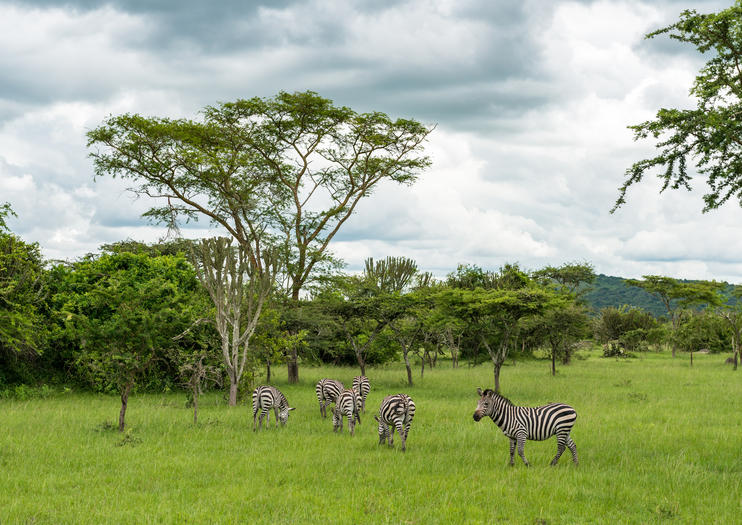
- Mburo National Park offers a variety of attractions for tourists:
- Lake Mburo itself—great for boat cruises and spotting hippopotamus, crocodiles, and water birds.
- Five lakes and permanent wetlands & swamps—a haven for aquatic animals.
- Open savanna grasslands and acacia trees—scenic landscapes with grazing antelopes and other animals.
- Forested gorges and rocky outcrops – perfect for guided walks and photography.
- Bird species—over 300 unique species recorded, including the shoebill stork, mosque swallow, African finfoot, pelican, heron, African fish eagle, saddle-billed stork, black-bellied bustard, and southern ground hornbill.
- Wildlife—buffalo, bush pig, hippopotamus, leopards, hyenas, and giraffes.
Travelers can see all these attractions firsthand during Ugandan wildlife tours or L. Mburo Park trips!
Fun Tourist Activities Done in Lake Mburo National Park, Uganda
Travelers visiting L. Mburo enjoy both traditional and unique activities during Ugandan trips that include:
- Game drives—Available as day and night game drives, offering sightings of buffalo, hippos, and leopards at night.
- Boat cruises—The most popular activity on Lake Mburo, where travelers spot hippos, crocodiles, and rare bird types.
- Guided walks—Walking safaris allow close encounters with wildlife.
- Bird watching—This is a popular safari activity in the park, with over 300 bird types recorded, making it a birding paradise.
- Horse riding & horseback tours – Unique to this park, offering peaceful game viewing.
- Cultural tours – Visiting Bahima communities to learn about cattle-keeping traditions and local life.
- Sport fishing – L. Mburo supports tilapia fishing, giving travelers a chance to interact with locals.
- Mountain Biking – L. Mburo can be explored using mountain bikes to see its fauna
Top-Rated Lake Mburo National Park Accommodation to Stay at During Uganda Tours
- Mburo National Park offers a wide range of luxury, mid-range, and budget lodges.
- Luxury lodges: Mihingo Lodge, Lake Mburo Safari Lodge.
- Mid-range lodges: Rwakobo Rock Lodge, Mantana Tented Camp, and Arcadia Cottages.
- Budget options: Rwonyo Rest Camp, Lake Mburo Eagles Nest Lodge.
All lodges are located near or inside the park, ensuring easy access to safari activities and wildlife viewing during L. Mburo Park safaris.
Safari Prices to Incur on Lake Mburo Park Tours
Average prices vary depending on budget:
- Park entrance fee: USD 40 for non-foreign residents, USD 20 for foreign residents, and UGX 20,000 for East Africans, according to the Uganda Wildlife Authority.
- Game drives and activities: USD 30–100 depending on activity (night game drives, boat cruises, horseback riding).
- Accommodation costs:
Budget: USD 30–70 per night.
Mid-range: USD 80–150 per night.
Luxury: USD 200–500 per night.
Liaise with a reputable Ugandan tour operator for the most accurate quotes!
How To Get to Lake Mburo National Park for Uganda Tours?
The park is easily accessible from Kampala and Entebbe:
- By road: 4 hours from Kampala, 4h 20m from Entebbe Airport, via the Kampala–Mbarara highway.
- By air: Charter flights are available from Entebbe International Airport or Kajjansi airstrip to Mbarara airstrip, then a short drive to the park.
- Main entry gates: Nshara Gate and Sanga Gate.
Best Time to Visit Lake Mburo National Park, Uganda
The best time to visit L. Mburo National Park is during the dry season (June–August, December–February) when wildlife viewing is at its best.
The wet season/rainy season (March–May, September–November) is ideal for bird watchers, as migratory birds arrive at the park’s diverse birding hotspots and locations.
Packing List for Lake Mburo Park Safaris

When visiting Lake Mburo, travelers should pack:
- Light clothes for daytime, warm jackets for evenings.
- Long-sleeved shirts and long pants
- Comfortable walking shoes.
- Wide-brimmed hat and sunglasses.
- Binoculars and a camera.
- Insect repellent and sunscreen.
- Rain jacket (especially in the wet season).
- A refillable water bottle.
Consult with your Ugandan travel agent on the most recommended items to bring for a Ugandan safari to avoid carrying excess luggage!
Rules And Regulations for Exploring Lake Mburo National Park, Uganda
The Uganda Wildlife Authority enforces rules to protect wildlife and travelers:
- Do not litter inside the park.
- Stay inside vehicles during safari drives.
- Night drives are only allowed with guides.
- Respect wild fauna; no feeding or chasing animals.
- Keep noise levels low.
- Fishing requires a permit.
- Horseback riding must be guided.
Follow these park rules and regulations for a safe Uganda safari experience for both humans and the animals!
Other Safari Parks of Uganda to Explore Alongside L. Mburo Park Tours
- Queen Elizabeth: Explosive craters, hippo channel, tree-climbing lions; 2–3 hour drive for savanna boat thrills.
- Bwindi Impenetrable: Misty gorilla forests, Batwa trails, birding; 5–6 hour drive for primate depth.
- Mgahinga Gorilla: Virunga volcanoes, golden monkeys, crater hikes; 6–7 hour drive for highland rarity.
- Kibale Forest: Chimpanzee capital, 13 primates, wetland birds; 5–6-hour drive for rainforest immersion.
- Murchison Falls: Nile thunder, crocodile boats, giraffe plains; 7–8-hour drive/flight for a dramatic finale.
Start planning your trip today for an amazing experience!
Uganda Safari Companies Offering L. Mburo Park Safaris
- Prime Safaris and Tours Ltd
- Wild Gorilla Safaris
- Safari Uganda Safaris
- Gorilla Safaris and Tours
- A Uganda Safari
- Africa Safaris Tours
- Uganda Birding Safaris
- Gorilla Trekking Uganda
- Kampala City Tour
- Self-Drive Car Hire Rentals Uganda
- Car Hire Rentals Uganda Kampala
Famous L. Mburo Park Safari Itineraries
- 3-Day Safari: A popular choice, this 3-day adventure includes a safari drive and boat cruise, often departing from Kampala or Entebbe.
- Multi-Day Safaris: Extend your stay to explore nearby parks like Queen Elizabeth National Park, creating a more comprehensive and immersive wild fauna experience.
Lake Mburo National Park Map
FAQs About Lake Mburo National Park
- What Is Lake Mburo Famous For?
Lake Mburo Park is famous for its large populations of Burchell’s zebras, impalas, diverse bird species, and scenic 5-lake system. Its unique wildlife, cultural history, and activities like boat cruises and horseback riding safaris also make it special.
- How Much Does It Cost to Go to Lake Mburo National Park?
Entry fees are around USD 40 for foreign non-residents, USD 30 for foreign residents, and UGX 20,000 for East Africans. Additional costs apply for activities like guided safari drives, boat rides, and accommodation.
- Is Lake Mburo Worth It?
Yes, Lake Mburo NP is worth exploring for its diverse wildlife, birding opportunities, cultural tours, and accessibility from Kampala. Its smaller size allows easier exploration, and its unique absence of elephants and lions offers safer experiences.
- Are There Lions in Lake Mburo National Park?
No, Lake Mburo National Park in the west region of this nation has no lions. This makes walking safaris, horseback safaris, and bike rides possible, giving travelers a unique chance to explore the park on foot or horseback without predator threats.
- Are There Elephants in Lake Mburo National Park?
No, elephants are not found in Lake Mburo. This absence ensures more open landscapes and safer guided walks. Travelers instead enjoy sightings of giraffes, hippopotamuses, and abundant antelopes throughout the park.
- What Is Found at Lake Mburo National Park?
Lake Mburo Park hosts 68 mammals, 315 birds, and five waterbodies with crocodiles and hippos. Visitors can also see buffalo, giraffes, leopards, and Ankole cattle grazing near wildlife, plus cultural experiences with the Bahima community.
- What Is Unique About Lake Mburo National Park?
Its uniqueness lies in being Uganda’s only park with impala, holding the largest zebra population, plus Lake Mburo offers unique horseback safaris.
Conclusion
Lake Mburo National Park captivates with fauna-dotted acacias, serene lakeside hippopotamuses, and rare walking safaris amid Uganda’s compact savanna. Enjoy boat cruises, birding, and cycling while there. Contact us now to book your Lake Mburo Park safaris and savor intimate wildlife encounters in this tranquil gem!

Over 300 excellent reviews on TripAdvisor
Over 50 excellent reviews on Safaribookings.
Over 50 excellent reviews on Safaribookings.
12+ years of experience.
Best price guarantee.
Robert
Get in touch with a travel expert to plan your gorilla tours and wildlife safaris...
Obtain professional travel guidance by either calling us or arranging a video conference with our experts.